

Legalization is required when documents will be used in a country that is not a member of the Hague Convention of 1961. Unlike a simple apostille, legalization is a multi-step chain certification that includes US Department of State authentication and embassy approval.
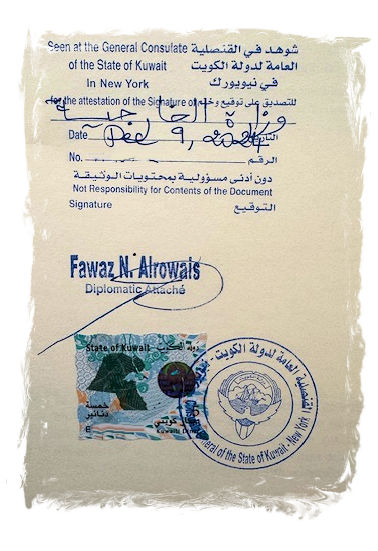
What Is Document Legalization?
Document legalization – also called consular legalization or chain certification – is the process of authenticating US documents for recognition in non-Hague countries. Instead of a single apostille stamp, legalization requires a sequential chain of authentications:
- US Department of State authentication – verifies the originating agency’s credentials.
- Destination country embassy or consulate approval – the foreign diplomatic mission in the US validates the federal seal and approves the document for domestic use in their country.
- Certified translation (required by many countries) – documents must often be accompanied by translations meeting the destination country’s ministry standards.
Any error in sequencing, formatting, or translation typically results in immediate rejection by the consular review board.
Which Countries Require Legalization?
Countries that are not signatories to the Hague Convention of 1961 require legalization instead of an apostille. This includes much of:
- Middle East: Qatar, Kuwait, Iraq, Egypt, Jordan, Lebanon, Libya, Yemen
- Southeast Asia: Cambodia, Laos, Myanmar (Burma), Malaysia
- Parts of Africa and Asia – check the HCCH members list for the current complete list
Saudi Arabia, the UAE, and China are Hague members but may have specific additional requirements for certain document types. Always verify your destination country’s current requirements before starting.
Legalization vs. Apostille: Key Differences
| Apostille | Legalization | |
|---|---|---|
| Who requires it | 120+ Hague Convention countries | Non-Hague countries |
| Steps | Single certificate from one authority | Multi-step chain (US DoS + embassy) |
| Timeline | Days to weeks | Several weeks or more |
| Cost | Service charge + state/federal fee | $100 service charge + applicable state fees + $75/doc federal legalization fee + embassy fees |
| Translation required | Sometimes | Often required |
Common Documents Requiring Legalization
Federal documents most commonly requiring consular legalization include:
- FBI criminal background reports for overseas employment or visa applications in non-Hague countries
- Corporate documents – charters, certificates of good standing, business registration packets
- Federal court orders – probate judgments, adoption decrees
- USCIS documents and naturalization records
- Academic credentials for enrollment at foreign institutions
Pricing
Apostille50 charges a federal legalization fee of $75 per document for non-Hague country orders, in addition to the standard $100 service charge and state fee if applicable. Embassy or consulate fees vary by country and are separate. Contact info@apostille50.com for a full estimate for your specific country and document set.
How Apostille50 Handles Legalization
Our team manages every phase of the federal legalization pipeline:
- Dedicated case managers who track embassy routing status
- Verified translation packages meeting foreign ministry standards
- Consolidated mailing logistics to eliminate split-package errors
- Proactive compliance alerts for changing diplomatic requirements
For documents destined for Hague Convention countries, see our state apostille and federal apostille services. If you are unsure which process applies to your destination country, contact us and we will confirm.
Frequently Asked Questions
What is document legalization?
Document legalization (also called consular legalization or chain certification) is the process of authenticating US documents for use in countries that are not members of the Hague Convention of 1961. Unlike apostille certification, legalization requires multiple sequential steps: US federal authentication by the Department of State, followed by authentication by the destination country’s embassy or consulate in the United States.
Which countries require legalization instead of an apostille?
Countries that are not signatories to the Hague Convention of 1961 require legalization rather than apostille. This includes many countries in the Middle East (Qatar, Kuwait, Iraq, Saudi Arabia requires only specific documents), Southeast Asia (Cambodia, Laos, Myanmar), and parts of Africa. Always verify the current status of your destination country at hcch.net before beginning the process.
What is the difference between an apostille and legalization?
An apostille is a single standardized certificate issued by a competent authority (a Secretary of State or the US Department of State) that is accepted in all 120+ Hague Convention countries. Legalization is a multi-step chain process: first the US Department of State authenticates the document, then the destination country’s embassy or consulate in the US adds its own stamp of approval. Legalization takes longer and costs more than an apostille.
How much does legalization cost through Apostille50?
Apostille50 charges a federal legalization fee of $75 per document for orders destined for non-Hague countries, in addition to the standard $100 service charge. This covers the US Department of State authentication step. Embassy or consulate fees vary by country and are additional. Contact info@apostille50.com for a full estimate.
Do I need certified translations for legalization?
Many countries require certified translations of US documents as part of the legalization process. Requirements vary by destination country and document type. Apostille50 does not arrange translations – you must obtain certified translations on your own and submit them alongside your documents. Once the translation is in hand, we handle the US Department of State authentication and routing to the destination country’s embassy or consulate.
